

-
 By:
Valerie Puffenberger, PMHNP-BC
By:
Valerie Puffenberger, PMHNP-BC
-
 Editor:
Phyllis Rodriguez, PMHNP-BC
Editor:
Phyllis Rodriguez, PMHNP-BC
-
 Clinical Reviewer:
Dr. Ash Bhatt, MD, MRO
Clinical Reviewer:
Dr. Ash Bhatt, MD, MRO
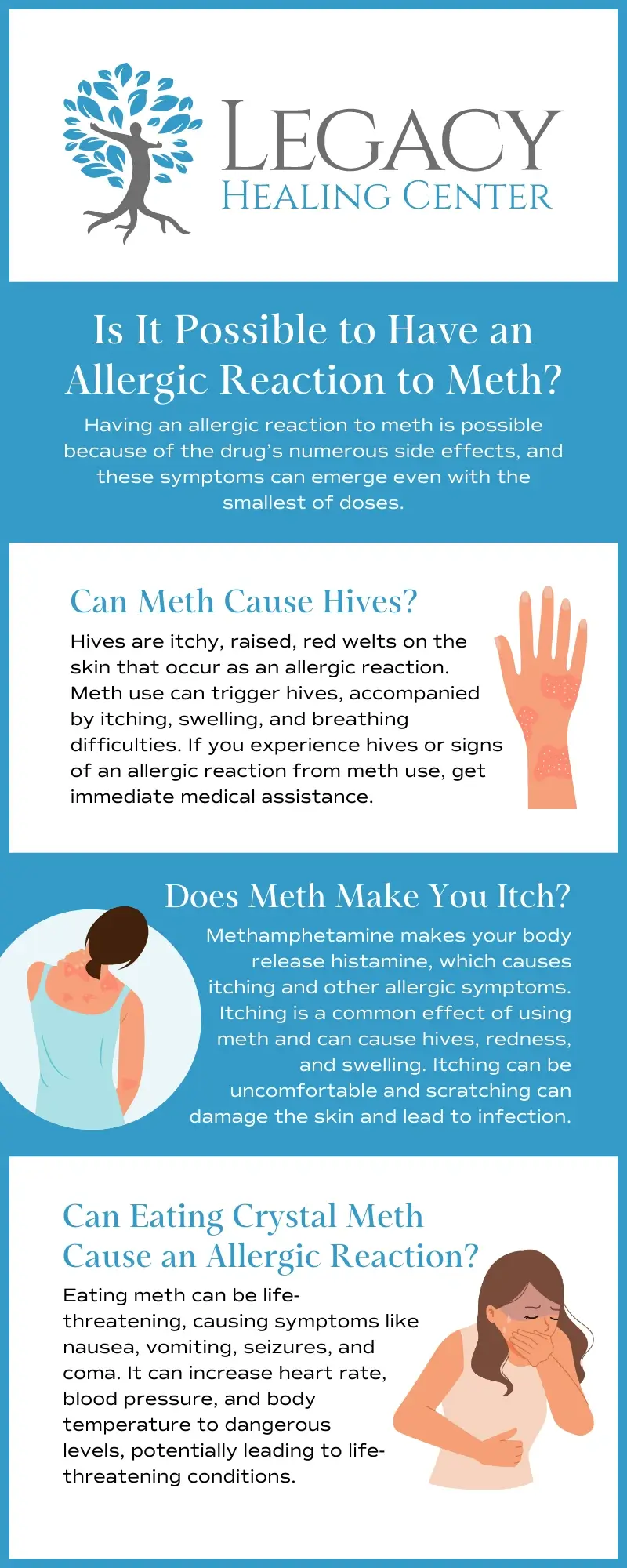
Is It Possible to Have an Allergic Reaction to Meth?
Meth addiction treatment in Los Angeles often involves addressing not just the psychological and physical effects of the drug, but also potential medical complications. One such complication, although uncommon, is an allergic reaction to methamphetamine. These reactions can stem from the drug itself or from toxic additives and contaminants commonly found in street meth. Symptoms may include mild skin irritation and itching, or escalate to severe responses such as anaphylaxis—characterized by breathing difficulties, swelling, and dangerously low blood pressure. Symptoms such as swelling in the lips, face, throat, and tongue, hives, and difficulty breathing can also occur.
People with existing allergies or heightened sensitivities are particularly vulnerable. Certain medicines are more likely to cause allergic reactions, and meth can provoke similar responses. Prompt recognition and management of these symptoms are vital in addiction treatment rehab centers, where individuals undergoing meth addiction treatment may already be dealing with complex health issues. Recognizing the signs of an allergic reaction to meth is crucial for ensuring timely medical intervention.
As a trusted addiction treatment provider, we understand that meth addiction is a complex and challenging problem that can have severe consequences for individuals and their loved ones. The first step to quitting substance abuse and recovering from an allergic reaction to meth is with a medical detox. Even a single dose of meth can trigger a serious allergic reaction, which can easily be confused with an overdose, especially in first-time users.
After detox, Legacy Healing Center offers a range of comprehensive programs to support long-term recovery. Immediate medical help should be sought if there is difficulty breathing, severe swelling, or signs of anaphylaxis, as these require emergency services.
Can you Get an Allergic Reaction from Eating Crystal Meth?
Methamphetamine is a highly potent and addictive drug that can cause significant harm to the body and brain. Therefore, eating crystal meth can have severe consequences and is considered a potentially life-threatening situation.
When ingested, crystal meth can cause a range of symptoms, including nausea, vomiting, abdominal pain, seizures, and even coma. Methamphetamine can also cause a dangerous increase in heart rate, blood pressure, and body temperature, which can lead to heart failure, stroke, or other life-threatening conditions.
If you suspect someone has ingested crystal meth, seek medical attention immediately. The person may need urgent medical care to stabilize their vital signs and prevent further harm.
Understanding Allergic Reactions to Meth
What is an allergic reaction?
An allergic reaction occurs when your immune system overreacts to a substance it perceives as harmful, even if the substance itself might not typically cause harm. This reaction can cause symptoms ranging from mild (itchiness, rashes) to severe (anaphylaxis).
How does methamphetamine interact with the body?
Methamphetamine, a powerful stimulant, can trigger various physical responses due to its chemical properties. While it’s not inherently allergenic, it can provoke immune system responses in some individuals. This is often due to impurities in the drug, additives, or the body’s heightened sensitivity to meth’s effects.
Identifying Symptoms of an Allergic Reaction to Meth
- Skin Reactions: Meth can lead to itching, hives, or a rash, often due to histamine release or direct irritation from the drug or its byproducts.
- Respiratory Symptoms: Some individuals may experience nasal congestion, difficulty breathing, or swelling in the throat.
- Systemic Symptoms: Fatigue, nausea, or fever could indicate a more widespread immune response.
When to Seek Medical Attention:
- If the itching, hives, or rash become severe or spread rapidly.
- If symptoms are accompanied by difficulty breathing, swelling, or dizziness, as these could indicate a life-threatening allergic reaction (anaphylaxis).
- Persistent or worsening symptoms even after discontinuing meth use.
Managing Allergic Reactions to Meth
Managing an allergic reaction to methamphetamine is a medical emergency that requires swift action and expert care. Recognizing the difference between an allergic reaction and a meth overdose is crucial, as both can present with severe symptoms but require different interventions. Common signs of an allergic reaction to meth include sudden difficulty breathing, swelling of the face, lips, throat, or tongue, and the appearance of a skin rash or hives. Other systemic symptoms, such as blurry vision, extreme fatigue, or excessive scratching, may also occur. In the most severe cases, anaphylaxis can develop rapidly, leading to dangerously low blood pressure, heart failure, or seizures—conditions that require immediate emergency services.
Individuals with a history of meth addiction, substance abuse, or certain medical conditions—such as those taking medicines for attention deficit hyperactivity disorder—may be at higher risk for drug hypersensitivity and adverse reactions. Methamphetamine is a powerful stimulant and highly addictive, and continued use increases the likelihood of experiencing many adverse side effects, including allergic reactions. Withdrawal symptoms and mental aspects of methamphetamine addiction can further complicate the clinical picture, making professional assessment and treatment essential.
If you or a loved one experiences any signs of an allergic reaction to meth, it is vital to seek medical attention without delay. Healthcare professionals are equipped to provide proper care, which may include medications such as antipsychotic medications, supportive therapies, and monitoring for complications like heart attack or respiratory issues. Inpatient treatment offers around-the-clock care for those with severe symptoms, while outpatient rehab can support ongoing recovery and help prevent relapse.
A comprehensive approach to treatment is key. According to systematic reviews and meta-analyses, addressing both the physical and mental aspects of methamphetamine addiction leads to better outcomes. Treatment options may include medication management, therapy, and support groups, all tailored to the individual’s needs. The National Institute on Drug Abuse underscores the importance of prompt recognition and intervention for allergic reactions and other complications related to methamphetamine use.
With the right support and evidence-based care, individuals can overcome meth addiction, manage withdrawal symptoms, and reduce the risk of future allergic reactions. Legacy Healing Center is committed to providing luxury, individualized treatment that addresses every aspect of recovery—helping clients achieve lasting health and a renewed sense of hope.
Heal From Addiction with a Facility That Cares
Addiction to methamphetamine can cause a range of distressing and uncomfortable allergic reactions, including hives and itching, as well as other symptoms such as swelling and difficulty breathing. If you or someone you know experiences any allergic reaction after using meth, seek medical attention immediately.
Medical detox is often the first step in recovery from meth addiction and can help lessen the severity and duration of withdrawal symptoms. Withdrawal symptoms from meth can be dangerous and may require medical supervision. Inpatient treatment programs provide around-the-clock care and support for individuals recovering from meth addiction, while outpatient rehab can offer a lower-cost treatment option for those who cannot completely leave their home life. A comprehensive addiction treatment program addresses both the physical and psychological effects of meth addiction, including the physical changes to the brain caused by methamphetamine addiction. After detox, individuals can benefit from various addiction treatment programs to support long-term recovery. Methamphetamine treatment programs aim to improve the life and behavior of the addict by teaching new coping skills and preventing future substance abuse. A good treatment program will focus on the root cause of addiction, which is unique to each person. Behavioral therapy tries to identify and change self-destructive and unhealthy behaviors. Group therapy can help individuals with similar methamphetamine addiction share their points of view and create connections. Family therapy helps individuals reconnect with loved ones and mend lost relationships due to addiction. Inpatient treatment programs help addicts achieve sobriety outside their current environment. Each person’s addiction and recovery journey is unique, and the program’s length varies from one person to the next.
At Legacy Healing Center, our addiction therapy programs address the physical, emotional, and mental aspects of addiction. Our team of experienced healthcare providers and therapists is dedicated to helping individuals achieve long-term recovery and live healthy, fulfilling lives.
To learn more about our treatment center, call us today and speak with one of our trained intake specialists.